After the spectrum… Will the loss of confidence in banks lead to a “liquidity crisis”?
After the spectrum… Will the loss of confidence in banks lead to a “liquidity crisis”?
2026-09-10
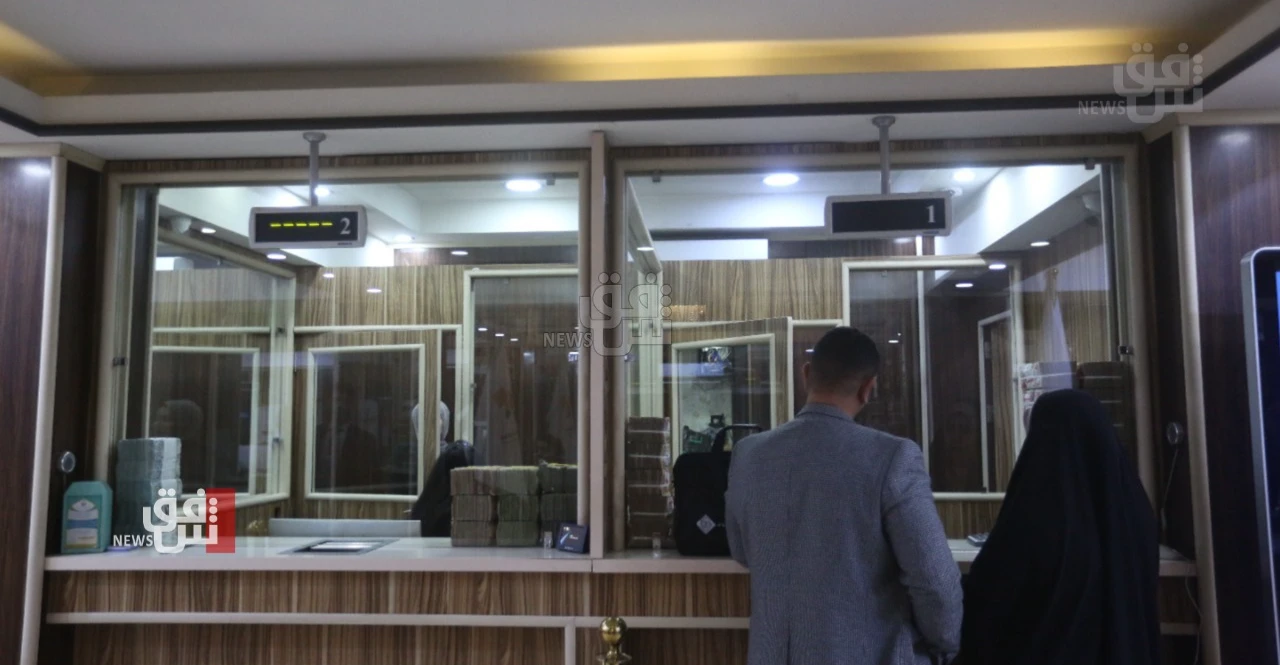 Shafaq News – Baghdad
Economic experts assure that depositors’ funds in Iraqi banks are not at risk, given the data available so far, or any indicators that would warrant imposing comprehensive restrictions on withdrawals. However, they pointed out that the crisis at Al-Taif Islamic Bank has brought back the loss of confidence in the banking sector to the forefront, and that the spread of fears and rumors may itself become a source of pressure on liquidity.
In its latest statement, the Central Bank of Iraq confirmed on Tuesday that the rights of depositors of Al-Taif Islamic Bank are protected, and that imposing guardianship on it for 18 months is a supervisory and preventive measure that “does not mean its bankruptcy.”
He noted that he is working with the trustee, Emad Mohammed Hamad, to enhance liquidity, regulate withdrawals, and gradually meet obligations, while giving priority to the salaries of employees whose accounts are held at the bank.
This came after protests in the capital Baghdad and Basra (in the far south of the country) since last Sunday, against the backdrop of the suspension or restriction of withdrawals and some banking services.
Regarding the extent of general risks to Iraqi deposits and the possibility of imposing restrictions on withdrawals, the financial and economic advisor to the Iraqi Prime Minister, Mazhar Muhammad Saleh, says that the safety of deposits and the stability of the banking system are a priority for regulatory authorities.
Saleh told Shafaq News Agency that the available indicators do not currently show anything that warrants concern about the ability of the banking system in general to meet its obligations towards depositors.
He explains that regulatory authorities continuously monitor liquidity, solvency, capital adequacy, and asset quality levels, in addition to credit, liquidity, market, asset management, and liability risks.
He emphasizes that banks are required to maintain appropriate levels of liquid assets that enable them to meet short-term obligations and withdrawal and transfer requests.
The government advisor reiterates that, according to current data, there are no general indicators that warrant resorting to exceptional measures regarding withdrawals, calling on citizens to rely on official data and not to be swayed by rumors.
He also emphasizes that protecting depositors’ funds and enhancing confidence in the banking system are essential pillars of monetary and financial stability.
Shafaq News Agency tried to contact the Central Bank of Iraq and get answers to several questions, but most of its officials refused to make any statement.
Varying risks
But economic researcher Ahmed Eid believes that the absence of official decisions imposing general restrictions does not necessarily mean that all Iraqi banks enjoy the same level of stability.
Eid told Shafaq News Agency that the risks vary from bank to bank depending on its financial position, liquidity size, and ability to meet its obligations.
He points out that some banks facing financial problems or regulatory procedures may face temporary difficulties in meeting withdrawal requests, without this meaning that the situation should be generalized to the entire sector.
He adds that Iraq suffers primarily from weak banking liquidity, partly due to citizens hoarding a large portion of their money outside the banking system as a result of weak confidence.
He warns that the spread of fears and rumors could lead to widespread withdrawals that would put pressure on liquidity even in banks that do not have a fundamental problem.
A reform that protects depositors
Economic expert Ahmed Abdel Rabbo agrees on the importance of distinguishing between regulatory measures and bankruptcy, saying that there are no indicators that warrant concern about depositors’ savings being exposed to sudden losses, and that the measures taken by the Central Bank aim to protect funds and stabilize the banking system.
Abd Rabbo told Shafaq News Agency that what is happening is part of a broader banking reform plan based on evaluating banks according to governance, compliance, risk management and transparency standards, while opening up paths for banking institutions to either continue independently, merge or exit the market.
The Central Bank of Iraq announced in February 2026 that banks subject to the reform program would follow one of these paths, in a move reflecting a trend to reshape the sector and reduce the number of institutions unable to meet the new requirements.
Abdel Rabbo says that talk of general restrictions on withdrawals should not be automatically linked to the reform program, noting that the Central Bank has confirmed that ensuring depositors’ access to their funds is a priority, and that licensed banks participate in the deposit guarantee system.
These reform measures come at a time when the Iraqi banking sector is facing a broader challenge related to liquidity and confidence, amid pressure on some banks to access the dollar and the international financial system, and the continued practice of citizens keeping a large portion of their money outside the banking system.
These measures are also being carried out in conjunction with a program implemented by the Central Bank of Iraq to restructure the sector in cooperation with the global management consulting firm Oliver Wyman, with the aim of strengthening governance, risk management and compliance with international financial standards.
shafaq.com
