The Iraqi economy in 2025: The year of heavy oil and postponed reforms
The Iraqi economy in 2025: The year of heavy oil and postponed reforms
2025-12-26 02:03
 Shafaq News – Baghdad
Special Report
The year 2025 witnessed a complex economic path in Iraq, in which oil abundance was intertwined with the fragility of the financial structure, and the progress of some production files with the stumbling of other vital files, most notably energy, electricity and economic diversification.
Oil remained, once again, the driving force behind economic decisions, as the government attempted to balance the demands of financial stability with increasing internal and external pressures.
The economic trajectory during 2025 also reflected a clear overlap between economic and political decisions, as major issues were not managed in isolation from geopolitical considerations, external pressures, and internal balances. This restricted the government’s room for maneuver, especially in the areas of energy, salaries, and international partnerships, and postponed the implementation of long-awaited structural reforms.
Oil and gas: A year of big contracts and delicate shifts
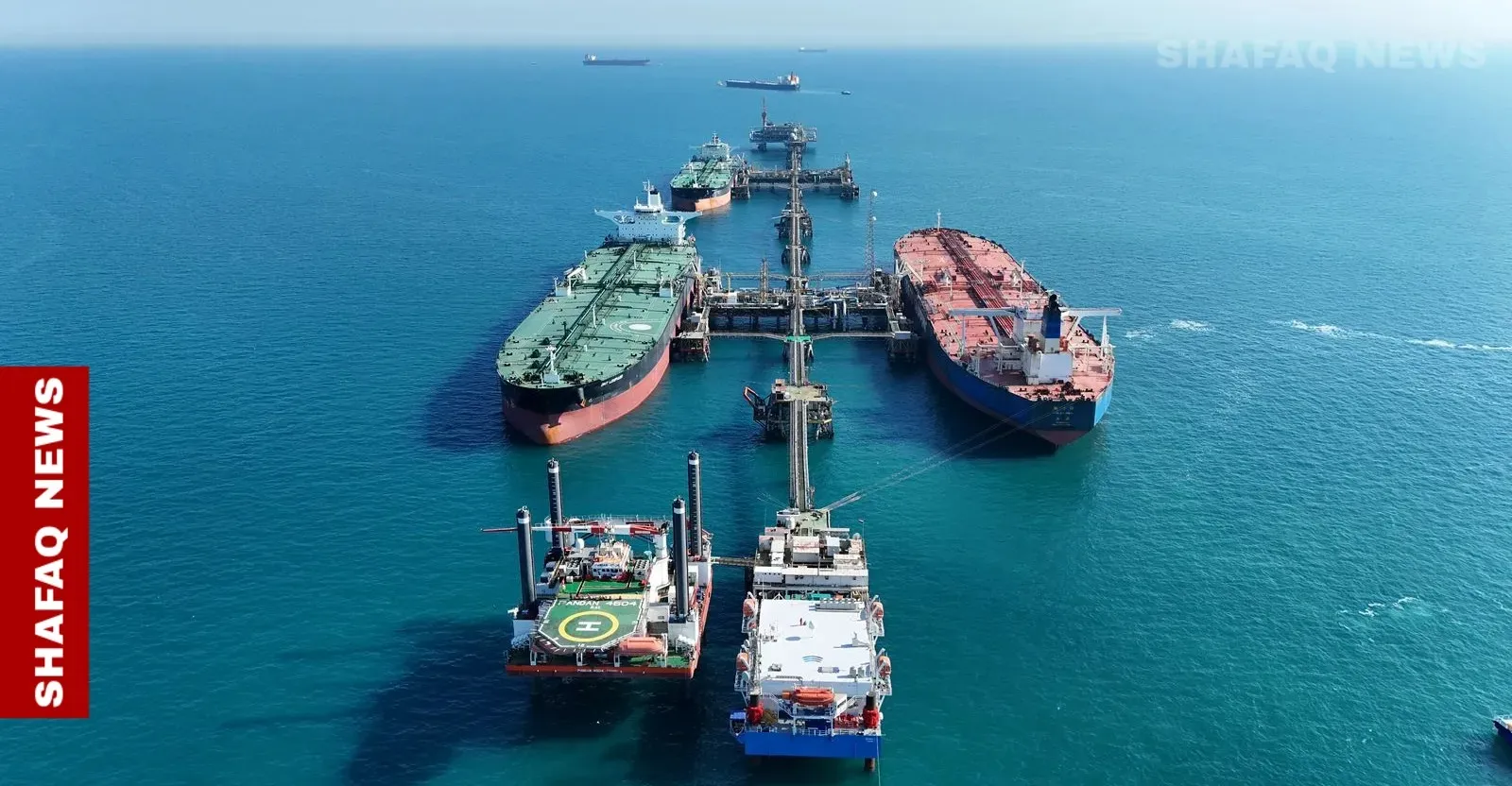
The oil sector has taken center stage in the economic landscape as the main source of public revenues, in light of global price fluctuations and Iraq’s commitments within the “OPEC+” alliance, and the impact of this on the budget and public spending.
The beginning of the year carried a positive indicator, as the Middle Oil Company announced on January 20, in cooperation with the Chinese company (EBS), a major oil discovery in the East Baghdad South field estimated at about two billion barrels.
But the sector soon faced severe pressure. On March 28, Iraq proposed cutting spending by international oil companies by 30 percent after the collapse in prices, while maintaining production levels.
The middle of the year was full of contracts, most notably the signing of a memorandum of understanding to develop the Hamrin field with the American company HKN, and the launch of the executive work for the Nineveh refinery with a capacity of 70,000 barrels per day, in addition to the contract to develop the Akaz gas field with the American company Schlumberger, and to raise its production to 100 million standard cubic feet per day.
In September, a joint operating agreement for the Integrated Gas Development Project (GGIP) in the Artawi field in Basra was signed with Total Energies and Qatar Energy, in a move described as one of the most important projects for integrating oil, gas, and clean energy. Oil also resumed flowing through the Kurdistan Region pipeline to Turkey for the first time in over two and a half years.
On October 4, the Iraqi Ministry of Oil signed a contract with the American company Excelerate to implement the floating natural gas platform project in Basra Governorate. Under the agreement, Excelerate Energy will supply Iraq with its first floating unit for storing and regasifying liquefied natural gas, on November 2.
The Ministry of Oil also announced the signing of a contract to activate the development of the four Kirkuk fields with the British company BP (Kirkuk with its two domes “Baba and Avana”, Jambur, Bai Hassan, and Khabbaz) in addition to the rehabilitation of the facilities of the North Gas Company, to increase gas production.
However, the file was not without crises, as the Russian company Lukoil declared force majeure in the West Qurna-2 field due to US sanctions, which later prompted Baghdad to extend direct invitations to American oil companies to manage the field.
In a remarkable development, Iraq announced on November 4 that it had stopped importing gasoline, diesel and kerosene after achieving self-sufficiency, in a move that paved the way for the country to become an exporter of oil derivatives in the next phase, an economic achievement that had been postponed for many years.
On December 1, the Ministry of Oil extended direct and exclusive invitations to a number of major American oil companies to enter into formal negotiations and submit their technical and commercial bids, with the aim of competing for the management of the West Qurna II field.
Electricity and Energy: Missed Opportunities
Despite some progress in the electrical interconnection with Turkey, where a contract was signed in April to double the capacity from 300 to 600 megawatts, 2025 saw a notable failure in the gas import file from Turkmenistan via Iran, under direct American pressure, leaving Iraq facing a difficult electricity summer.
In contrast, the Ministry of Electricity launched the first waste-to-energy project in Nahrawan, Baghdad, with a capacity of 100 megawatts per day, in a move that carried an important environmental and economic dimension.
Fiscal policy: Forced discipline and political pressures
Public finances faced severe challenges in managing spending and deficits, amid near-total dependence on oil.
In February, the Ministry of Finance launched its first issuance of national bonds worth two trillion dinars, in an attempt to expand domestic financing tools.
In March, the ministry announced the results of its meetings with the International Monetary Fund, in which the Fund stressed the need to reform the banking sector and expand relationships with correspondent banks.
But political pressures became clearly evident in July, with the delay in paying the salaries of Popular Mobilization Forces fighters, amid conflicting accounts of technical reasons and others related to external pressures.
In December, the government made the drastic decision to suspend appointments, promotions and bonuses until the 2026 budget is approved, in an indication of the tight fiscal space.
Central Bank: The platform is finished and more is gone
The year 2025 witnessed an important shift in monetary policy, as the central bank announced in January the suspension of the electronic platform for selling dollars, while maintaining the mechanism for travelers.
In August, Iraq increased its gold reserves to 171.9 tons, maintaining its 29th position globally, in a move considered an additional pillar of monetary stability.
In December, the Supreme Administrative Court also upheld the annulment of the decision requiring the deposit of real estate purchase funds in banks, in a legal victory for citizens.
Trade and Agriculture: Relative Improvement and Food Stability
The agricultural sector recorded one of the most positive results in 2025. Iraq achieved a surplus in wheat production, with marketed quantities exceeding five million tons for the third consecutive year. The Ministry of Agriculture also banned the import of more than 40 products to achieve self-sufficiency and expanded date exports to Asia and Europe.
On the investment side, 252 agricultural licenses were granted, and a seasonal agricultural plan, considered one of the largest governmental, was approved, while Iraq participated in the FAO World Exhibition “From Seeds to Foods”, in an attempt to link its products to international value chains.
Planning and Reconstruction
The 2025 census, according to the Prime Minister’s financial advisor, represented the most important economic and developmental event of the year. It provided a comprehensive database for re-engineering public policies and directing spending more efficiently.
“The census is not merely a statistical procedure, but a sovereign tool for economic and social planning, enabling the state to move from managing resources based on estimation to managing them based on knowledge,” says Mazhar Muhammad Saleh in an interview with Shafaq News Agency.
The population reached approximately 47 million in 2025, with a population growth rate of approximately 1.99%. The Human Development Index for Iraq, for example, reached 0.695, reflecting a gradual improvement in education and health compared to previous years.
The Ministry of Construction also completed 199 projects in the sectors of roads, bridges, water, sewage and housing.
The official spokesman for the ministry, Nabil Al-Saffar, told Shafaq News Agency that some of the projects aimed at easing traffic congestion within the capital, Baghdad, were opened during 2025, either as part of projects or fully opened, including bridges and overpasses in the capital, Baghdad.
On the international relations front, the World Bank announced $930 million in funding for Iraq, primarily for the “Development Road” project. The Prime Minister also launched a $450 billion investment package across various sectors.
In contrast, Fitch rated Iraq at “B-“, citing its heavy reliance on oil and weak governance, while warning of delays to the 2026 budget, despite praising the resilience of internal stability.
Overall, the Iraqi economic landscape in 2025 reflected a cautious balance between stability and strain. The country achieved tangible progress in oil, petroleum products, agriculture, and population growth, but remained constrained by energy challenges, limited financial options, and continued reliance on a single resource.
Despite the positive indicators recorded in some sectors, the economic performance during 2025 was not tangibly reflected in the standard of living of citizens, as price pressures, unemployment and poor services continued, which kept the gap between the overall improvement in economic indicators and the general feeling of economic stability among the public.
shafaq.com
