The Arab Projects Summit kicks off in Baghdad… and the Central Bank of Iraq announces funding for projects worth 16 trillion dinars.
The Arab Projects Summit kicks off in Baghdad… and the Central Bank of Iraq announces funding for projects worth 16 trillion dinars.
2026-11-18
 Shafaq News – Baghdad
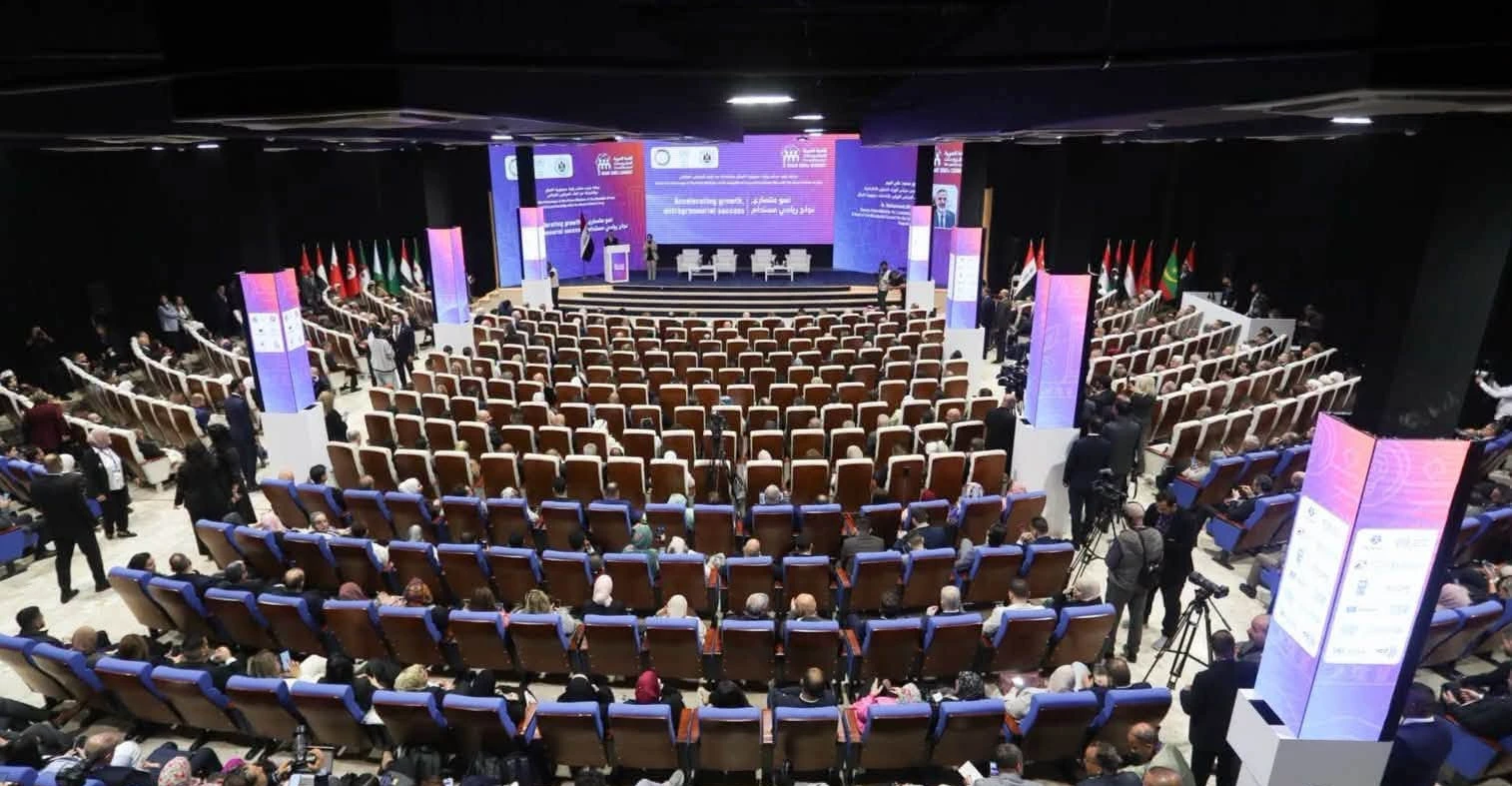
The fourth edition of the Arab Summit for Small and Medium Enterprises kicked off in Baghdad on Wednesday, November 18-20, 2026, at the Baghdad International Fairgrounds, under the patronage of the Prime Minister and jointly organized by the Iraqi Ministry of Planning and the United Nations Economic and Social Commission for Western Asia (ESCWA).
The Central Bank of Iraq participated in the summit as a sponsor and strategic partner, where it allocated a pavilion within the accompanying exhibition alongside the pavilions of participating banks, companies and economic institutions, providing visitors with reports and informational publications on the role of the banking sector in implementing financing initiatives.
The Central Bank’s pavilion reviewed the results of its financing initiative, which amounted to 16.3 trillion dinars from 2015 until the end of last October, and included more than 10,000 projects, as well as introducing the mechanisms for applying through participating banks to finance small and medium projects with a ceiling of up to 20 million dinars per project.
For his part, Minister of Planning Qutaiba Ghazi Majeed affirmed in a speech he delivered during his participation in the summit that: Small and medium enterprises represent a fundamental pillar for building more diversified, resilient and sustainable economies, due to their pivotal role in creating job opportunities, stimulating local markets, enhancing productivity, expanding the base of economic activity, stimulating innovation, and supporting value and production chains, as well as their contribution to reducing poverty and unemployment and achieving balanced development among different regions and societal groups.
He explained that the summit is being held at a critical stage in which Arab economies are experiencing rapid transformations and increasing challenges, in which global economic variables are intertwined with regional challenges, from slowing growth, market volatility, and rising financing and production costs, to technological and digital transformations, and changes in the nature of jobs and skills required in the labor market, as well as challenges related to climate change and resource scarcity, which coincide with rising rates of working-age population in most Arab societies.
In contrast, Deputy Prime Minister Mohammed Ali Tamim stressed the urgent need to create job opportunities, given the scarcity of capital funding for large strategic projects and the existing demand for infrastructure and the importance of continuing to complete it. He added, however, that we do not overlook the solutions offered by small and medium enterprises.
He explained that the condition for the success of entrepreneurship is that these projects be prepared to be linked to larger strategic projects and broader economic activities, and that they have access and a link to economic value chains and are qualified for integration and communication between Arab economic data.
He added that the qualitative shift in the economy that we seek to achieve will come through raising oil production to unprecedented levels and opening up access to global markets, stressing that Iraq will be a key pillar in meeting this demand during the next ten years, and emphasizing the importance of establishing an integrated Arab system for entrepreneurship and preparing the financial and legislative conditions for it, and facilitating mutual access to Arab markets.
For his part, Tarek El-Alami, Deputy Executive Secretary-General for Programme Support at the United Nations Economic and Social Commission for Western Asia (ESCWA), stated that small and medium-sized enterprises (SMEs) are of particular importance as they contribute to job creation, boost economic and productive activity, and expand the participation of youth and women in the economy. However, the challenge lies not only in the number of new projects but also in ensuring their sustainability, growth, increased productivity, competitiveness, and access to wider markets.
He stressed the importance of this summit as an opportunity to exchange experiences and discuss policies and practical solutions that can make a difference in the lives of entrepreneurs and in the economies of Arab countries, pointing to the importance of creating an institutional environment and development that helps projects to grow, simplifying business establishment procedures, improving government services, and promoting transparent competition to encourage investment and innovation, while expanding financing opportunities and taking advantage of digital transformation to ensure the success of projects, and enhancing economic integration and Arab cooperation.
shafaq.com
