Al-Zaidi’s tours… an Iraqi seat in the arrangements for the next stage
Al-Zaidi’s tours… an Iraqi seat in the arrangements for the next stage
2026-11-09
 Shafaq News – Baghdad/Amman/Ankara
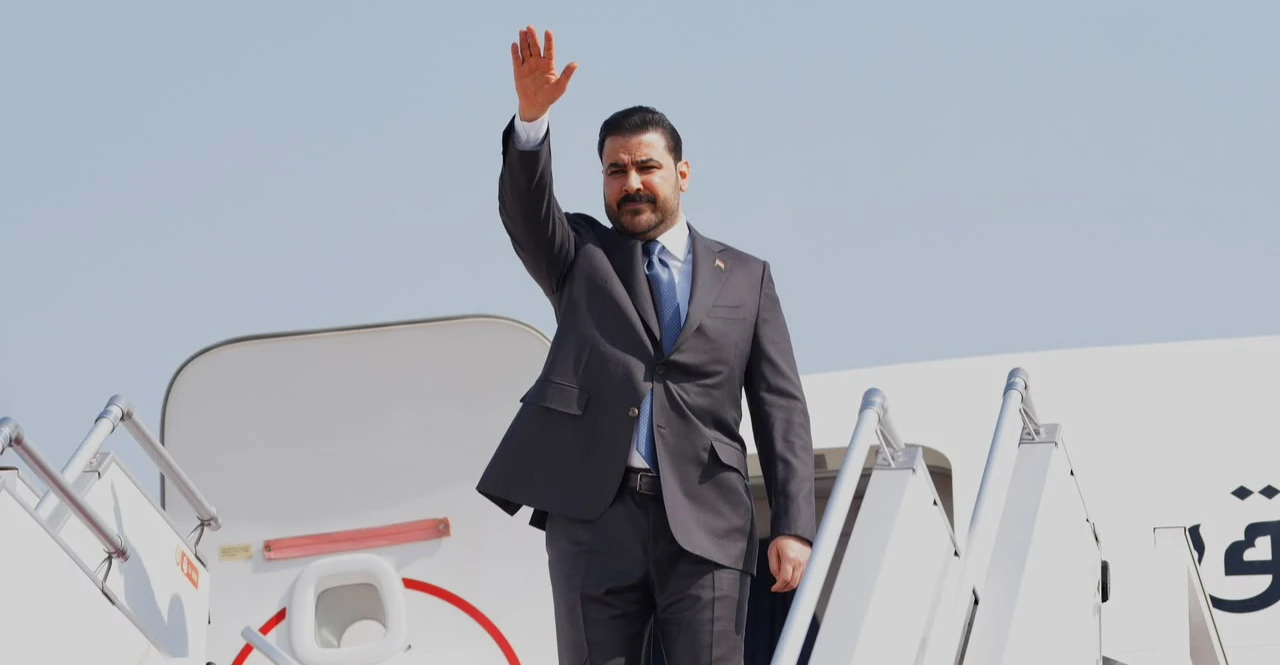
Analysts believe that Iraqi Prime Minister Ali al-Zaidi’s Arab and Gulf tours represent an attempt to reposition Baghdad in its regional environment and restore confidence with neighboring countries, in parallel with seeking to ensure an Iraqi presence in the post-war Middle East arrangements, amid questions about the government’s ability to translate its diplomatic openness into political influence and sustainable strategic partnerships.
Al-Zaidi began his regional moves with a visit to Saudi Arabia on October 14, 2026, where he met with Crown Prince Mohammed bin Salman. This was followed by a visit to Jordan on the 26th of the same month, during which he met with King Abdullah II, then Syria two days later, where he met with President Ahmed al-Sharaa, before heading to Bahrain on November 4, in what was considered the first visit by an Iraqi prime minister to Manama since 2003.
These moves will continue with an expected visit to Kuwait on November 8, followed by a visit to Lebanon on November 18, in a course that coincides with regional transformations imposed by the war on Iran that began on February 28, 2016, and the accompanying changes in the balance of power and concerns about the future of security, alliances, trade routes, and energy.
repositioning
In analyzing the dimensions of these tours, Firas Elias, a professor of international relations at the University of Mosul in Nineveh Governorate, says that al-Zaidi’s movements cannot be separated from the strategic transformations taking place in the region, especially the repercussions of the war on Iran, and the resulting changes in the regional balance of power.
Elias adds to Shafaq News Agency that Iraqi diplomacy is moving on two overlapping levels. The first is rebuilding trust with the Arab and Gulf surroundings and strengthening political, economic and security cooperation. The second is ensuring Iraq’s presence in discussions related to the future of regional security and post-war arrangements, and not leaving its interests and geopolitical position out of the calculations.
Elias points out that the choice of tour stops carries political implications. Saudi Arabia represents a pivotal weight in regional balances, and Jordan is a strategic extension of Iraq towards the Arab East, while the openness to Bahrain and Kuwait reflects Baghdad’s desire to strengthen trust with the Gulf environment, while Lebanon acquires special importance due to its position in the equation of the Iranian-Israeli conflict and the possible transformations in the post-war phase.
He affirms that strengthening bilateral relations does not conflict with Iraq’s ambition to participate in shaping the arrangements for the next phase. Rather, the two paths are complementary. However, moving to an influential regional role requires having an independent security decision, controlling armed factions, and providing guarantees to neighboring countries that Iraq will not become an arena for conflicts again.
He adds that the challenge lies not so much in expanding the diplomatic presence as in Baghdad’s ability to translate it into real political influence and sustainable strategic partnerships, noting that being absent from the moment of reshaping the balances may put Iraq in front of arrangements in whose formulation it does not participate.
Strategic location
For his part, writer and political analyst Ihab Al-Kayali, from Turkey, believes that Al-Zaidi’s tours reflect an Iraqi trend to reposition Baghdad on the political and regional map, and to move from the position of a state affected by conflicts to the position of a party participating in formulating future understandings and arrangements.
Al-Kayali tells Shafaq News Agency that the transformations imposed by the war and regional tensions may lead to a reshaping of alliances, energy, trade and security corridors, which gives Iraq special importance given its geographical location that makes it a link between the Gulf, the Levant, Turkey and Iran.
He adds that these geographical, economic and political factors qualify Iraq to play a pivotal role in any future regional arrangements, but the success of this approach remains conditional on unifying national decision-making, strengthening sovereignty and building trust with Arab countries, in addition to maintaining balanced relations with the various regional powers.
He points out that the challenge facing Baghdad is no longer limited to restoring its Arab relations, but is related to moving from a policy of balancing between axes to actual participation in creating new regional balances.
Restoring trust
Regarding relations with neighboring countries, Jordanian political analyst Hazem Ayad interprets these moves as an Iraqi attempt to break free from the stagnation and tension that has plagued Baghdad’s relations with its Arab surroundings, especially after the events of October 7, 2023 in the Gaza Strip, and the subsequent escalation that extended to several regional fronts, culminating in the war on Iran.
Ayad told Shafaq News Agency that the Iraqi government is seeking to address the accumulation of crises and rounds of escalation, and to open up to Arab countries through the gateways of economy and trade, and to develop diplomatic relations and security coordination, in a way that helps to contain tensions and keep Iraq away from the repercussions of conflicts.
He points out that these efforts have received a positive response from Arab countries, especially Saudi Arabia and Syria, but at the same time they face a state of anticipation and reservation, in light of previous experiences of Iraqi governments, including the governments of Haider al-Abadi, Mustafa al-Kadhimi and Mohammed Shia al-Sudani, which in turn sought to promote Arab openness.
He adds that neighboring countries are waiting for practical measures in the security and economic files, and that the continuation of these tours and their results on the ground will be the main criterion for assessing the seriousness of the Iraqi approach.
Ayad emphasizes that the diplomatic challenge facing al-Zaidi is significant, especially in light of the repercussions of the escalation between Washington and Tehran, the American restrictions on Iraq’s relations with Iran, as well as the security and economic requirements that countries in the region are setting to develop their relations with Baghdad.
He points out that the success of this path requires the sustainability of Iraqi action, and not being satisfied with visits and meetings, but rather translating them into practical steps that give a boost to relations with neighboring countries, including Türkiye.
Arab Depth
In the same context, Jordanian political analyst Adel Al-Ashram believes that Al-Zaidi’s moves reflect a trend towards returning Iraq to its Arab strategic depth, after years of relative distancing from this path since 2003.
Al-Ashram told Shafaq News Agency that these moves come in light of the changes taking place in the region, especially the American-Israeli war with Iran, and the existing ties between some armed factions inside Iraq and Tehran, and the challenges they pose to Baghdad’s relations with its surroundings.
He points out that the American moves in this file place the Iraqi government in front of the responsibility of dealing with the factions that operate outside the scope of the army and police, at a time when Baghdad is facing demands related to disarming them, as well as the repercussions of the sanctions and restrictions imposed on Iran.
Al-Ashram classifies the Iraqi moves into two tracks; the first includes the countries bordering Iraq, and the second is directed towards the Arab countries that do not share direct borders with Iraq, considering that these tours reflect an attempt to build a common Arab vision to confront future challenges, instead of dealing with them individually.
economic interests
As for the practical objectives, Iraqi political analyst Ziad Al-Arar links these visits to attempts to repair relations between Iraq and Arab countries, especially after the repercussions of the war on Iran and the accusations leveled against Iraq regarding targeting Arab countries, including Saudi Arabia.
Al-Arar told Shafaq News Agency that the moves aim to correct the course of Arab relations and prepare Iraq to play a more effective regional and international role, in addition to expanding its economic openness and diversifying its oil and energy export outlets, after recent developments showed the importance of not relying on a single export route.
He adds that strengthening trade and economic cooperation with Saudi Arabia, Jordan and Syria is a key aspect of these tours, allowing for the expansion of common interests and opening new areas for bilateral partnership.
In contrast, Al-Arar points to the existence of regional and international opposition and challenges, including the positions of parties close to Iran who do not see any benefit for Iraq in completing this opening, but he confirms in conclusion that Al-Zaidi’s government is proceeding with strengthening its diplomatic and economic policy.
shafaq.com
