Iraqi factions on the table… Trump brings together al-Zaidi and Arab leaders in New York
Iraqi factions on the table… Trump brings together al-Zaidi and Arab leaders in New York
2026-09-21
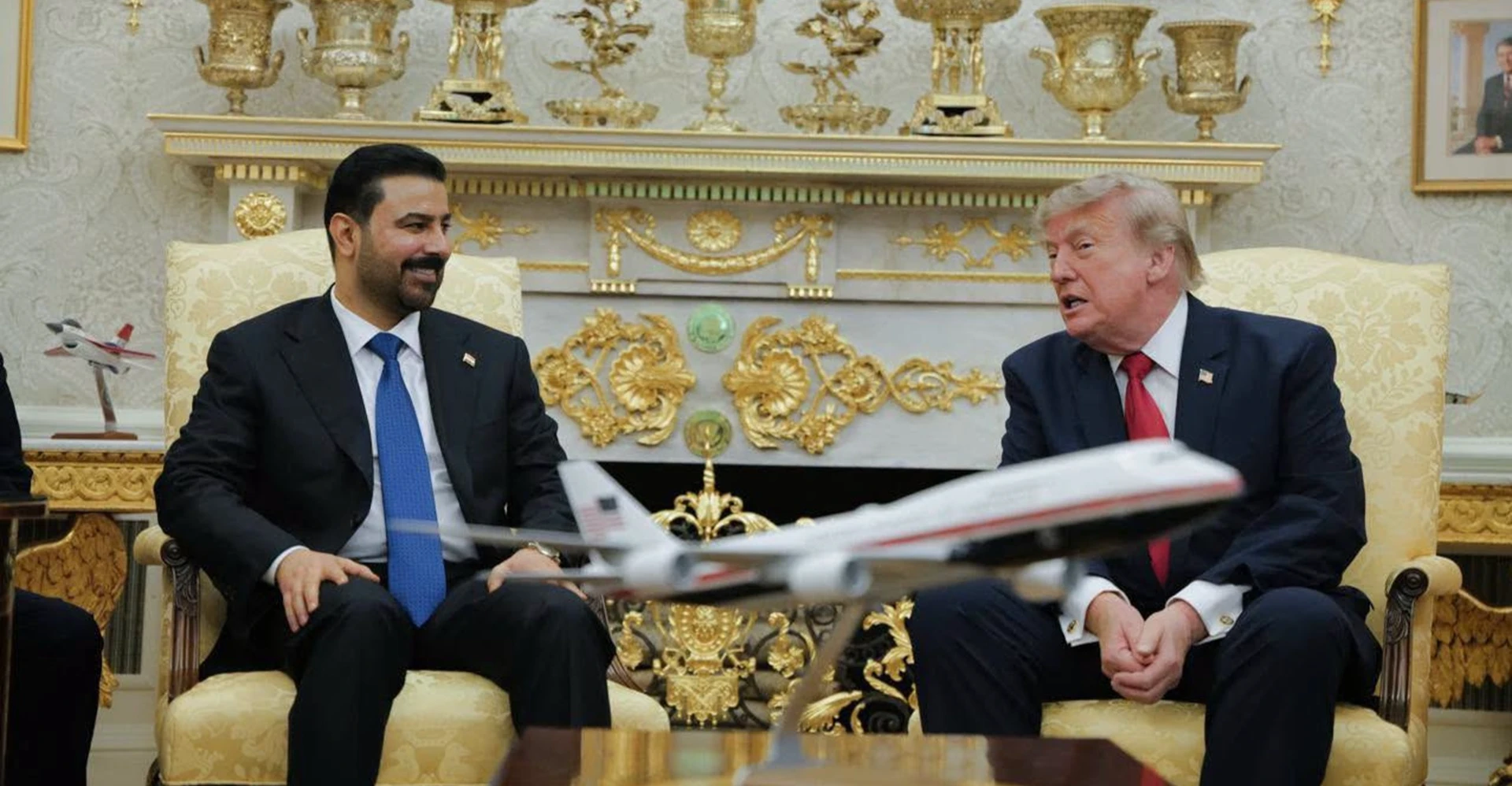 Shafaq News – Special Translation
Iraq is preparing to participate in an upcoming meeting between US President Donald Trump and Arab and Gulf officials in New York, at a time when attention is focused on the repercussions of the US-Iran war and the future of relations with Tehran, coinciding with the near end of the international coalition’s mission in Iraq, and the return of the issue of weapons of armed factions supported by Iran to the forefront of regional and international discussions, according to The National newspaper.
The newspaper, in a report translated by Shafaq News Agency, stated that Iraq, Jordan, and possibly Egypt, will join the meeting that Trump is scheduled to hold with officials from Arab and Gulf states on the sidelines of the United Nations General Assembly meetings, at a time when Washington and Arab countries are intensifying their diplomatic contacts regarding the war with Iran and the future of the region.
The National quoted an Emirati source as saying that Arab-Iranian talks are needed to restructure relations between the two sides, noting that Arab states are required to deal, for a period of time, with the idea of an “unstable Iran”.
The talks in New York are expected to focus on a range of issues, primarily Iran and its proxies in the region, as well as the future of the US-Iran war and its potential security and political repercussions for the countries of the region.
The corridors of the United Nations General Assembly are witnessing intense diplomatic activity, with a series of meetings, side meetings, and receptions bringing together American and Arab officials and diplomats from different countries, while the issue of Iran and regional security is expected to be among the most prominent issues discussed behind the scenes.
Prior to the opening of the General Assembly meetings, Brazilian President Luiz Inácio Lula da Silva will deliver an opening address, while New York will witness side meetings and receptions, including a reception hosted by US Secretary of State Marco Rubio for State Department staff and international media.
In this context, Anwar Gargash, the diplomatic advisor to the President of the United Arab Emirates, participated in a dialogue session with the United States Ambassador to the United Nations, Mike Waltz, which addressed Iran and regional security, amid expectations that these issues will form a major focus in the high-level American-Arab meetings.
Gargash called for a “new mindset” in dealing with Iran, stressing that the discussion about the future of the region, its shape, stability and development should not be limited to dialogue between Iran and the United States, but should also include direct dialogue between Iran and the Arab states.
Gargash said that the Iranians see themselves as a dominant power in the region and prefer to hold strategic discussions with the United States, but he stressed that issues related to the future and stability of the region should also be discussed between Iran and the Arab states.
He added that the UAE and other countries in the region need to deal, for a period of time, with what he described as an “unstable Iran,” in light of the transformations taking place in the region and the developments related to the war and regional conflict.
For his part, Waltz said that Iran has moved from supplying Hezbollah with advanced weapons to increasing the arming of the Houthi group, noting the spread of weapons he described as highly advanced, including drones and cruise missiles.
The Houthi issue is expected to be one of the most prominent issues raised in the high-level US-Arab talks, especially after the escalation in Yemen and the attacks targeting Saudi Arabia, in addition to the Houthis’ control over parts of the western coast of Yemen and their expansion in the vicinity of the Bab al-Mandab Strait.
The newspaper quoted sources in Tehran, Aden and Cairo as saying that Iran helped the Houthis plan and execute their campaign, suggesting that Tehran is using the conflict in Yemen as leverage in the war with the United States.
Regarding Iraq, The National noted that the end of the US-led international coalition’s mission against ISIS in Iraq, scheduled for September 30, represents a significant shift in the nature of the US military presence in the country.
This development is linked to another equally sensitive issue, namely the fate of the government order to restrict weapons to the state and limit the weapons of armed factions supported by Iran, an issue that still receives American and regional attention.
Iraq’s participation in the upcoming meeting with Trump comes at a time when the region is witnessing a redrawing of relations and alliances, with Arab states trying to become more involved in discussions about the future of the relationship with Iran, rather than leaving it exclusively within the framework of negotiations between Tehran and Washington.
The National says that Arab diplomacy is currently experiencing one of the highest levels of activity at the highest level in years, with a busy schedule of bilateral meetings, side meetings and receptions on the sidelines of the United Nations General Assembly meetings.
These moves are expected to focus on the future of the war with Iran, regional security, the role of armed groups linked to Tehran, as well as the future of political and security arrangements in the region after recent developments.
According to the newspaper, this diplomatic activity is not limited to public meetings, as parallel contacts and discussions are taking place behind the scenes between American and Arab officials regarding the most sensitive issues in the region, most notably Iran, Yemen, Gulf security, and the future of regional relations.
shafaq.com
