After 10 years, Iraq closes the “restricted zones” file and fully opens its airspace to civilian flights.
After 10 years, Iraq closes the “restricted zones” file and fully opens its airspace to civilian flights.
2026-09-18
 Shafaq News – Baghdad
The Director of the General Company for Airports and Air Navigation, Captain Ihab Saad Karim, announced on Friday the official end of the file of prohibited areas in Iraqi airspace, and its full opening to civil aviation, after nearly a decade of seizing large areas of airspace for military and security operations following the control of parts of the country by ISIS in 2014.
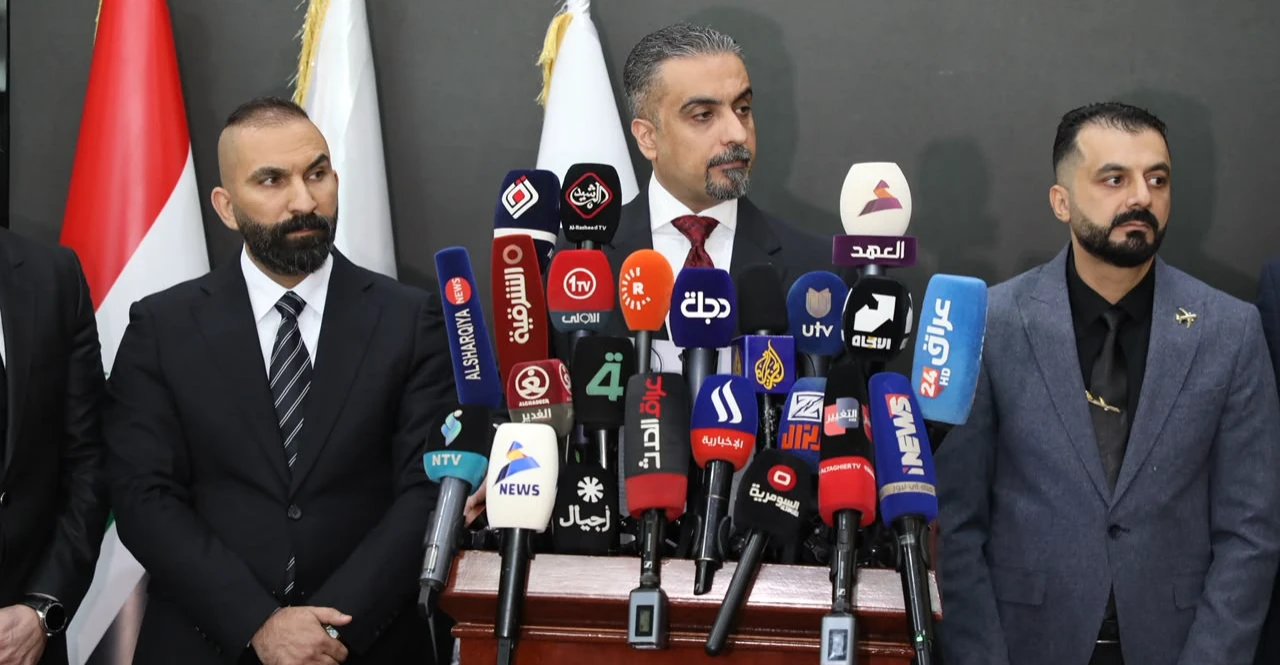
Karim said during a press conference held in the capital, Baghdad, and followed by Shafaq News Agency, that “the areas that were prohibited were in fact being held for the purposes of security operations, and currently, in coordination with the office of the Commander-in-Chief of the Armed Forces, they have been officially handed over to the General Company for Airports Management and Air Navigation, with the lifting of restrictions on civilian aircraft flying in their skies.”
He confirmed that “all the areas that were restricted, extending from the western part and from the north to the south, are now available for the use of civil aviation,” stressing that “air sovereignty is now entirely in Iraqi hands, and what is currently being worked on is updating the airspace data to be officially announced to international airlines.”
The company director pointed out that “the ban on civil aviation in these areas began in 2016 and 2017, and that lifting the ban today provides greater flexibility to create new air routes, which contributes to increasing the financial revenues generated from the passage of foreign companies, and which will reflect positively on the Iraqi economy.”
For its part, the Iraqi Ministry of Transport confirmed in an official statement the end of the file of prohibited areas in Iraqi airspace, and that the entire sky of Iraq and its airspace are now under the responsibility of sovereignty, and with a purely national decision and Iraqi will that accomplished the task in the best way.
The ministry explained that this very important progress was achieved in full coordination with the office of the Commander-in-Chief of the Armed Forces and its director, Lieutenant General Abdul Amir Al-Shammari, and was the result of more than 10 years of institutional and technical efforts, which included working on programs and paths that lead to raising the efficiency and smoothness of air traffic.
The statement added that the technical verification and official confirmation by the Airspace Management Team at the Air Operations Center confirmed that the military air areas listed in the Iraqi Air Guide are no longer used for military operations, noting that this development paves the way for completing the necessary technical and organizational procedures to remove these areas from the Iraqi Air Guide (Iraq AIP), in coordination with the relevant authorities.
According to the statement, for more than ten years, Iraqi air traffic controllers have been the first line of defense in managing air traffic near these areas, through continuous monitoring of aircraft routes, ensuring safe separation, and dealing with various operational requirements, which has contributed to maintaining the safety of aircraft and passengers.
The ministry concluded its statement by noting that completing these procedures will contribute to increasing the flexibility of using Iraqi airspace, improving the smooth flow of civil aviation traffic and developing its routes, as well as raising the operational efficiency of air navigation in the country.
shafaq.com
